When I booked this transpacific crossing, Samoa was one of the islands I was most excited about visiting. I had been here once, 22 years ago, when it was still called Western Samoa. We also stopped at nearby American Samoa on that cruise, and while we’ve revisited it a few times since then, Samoa is harder to get to.
G had never been to Samoa, and I was anxious to show him some of the sights I enjoyed when I visited here with friend Sheila. I found a tour on Viator that covered what I remembered from that day (in reality, I suspect every tour on Samoa covers the same places) and booked and paid for it several months ago.
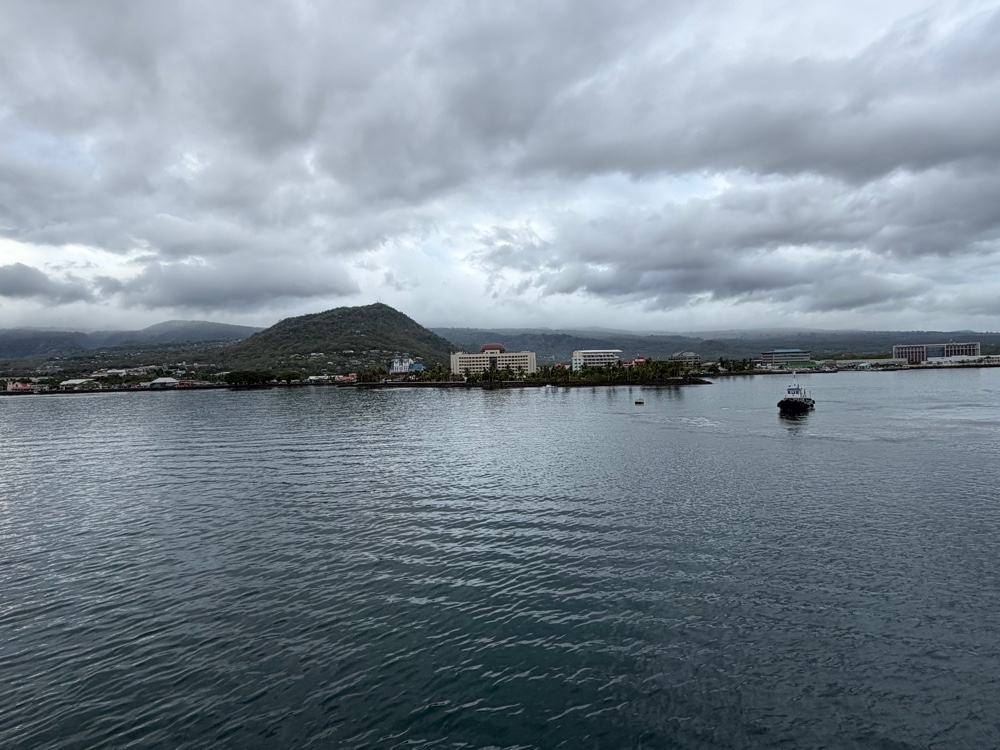
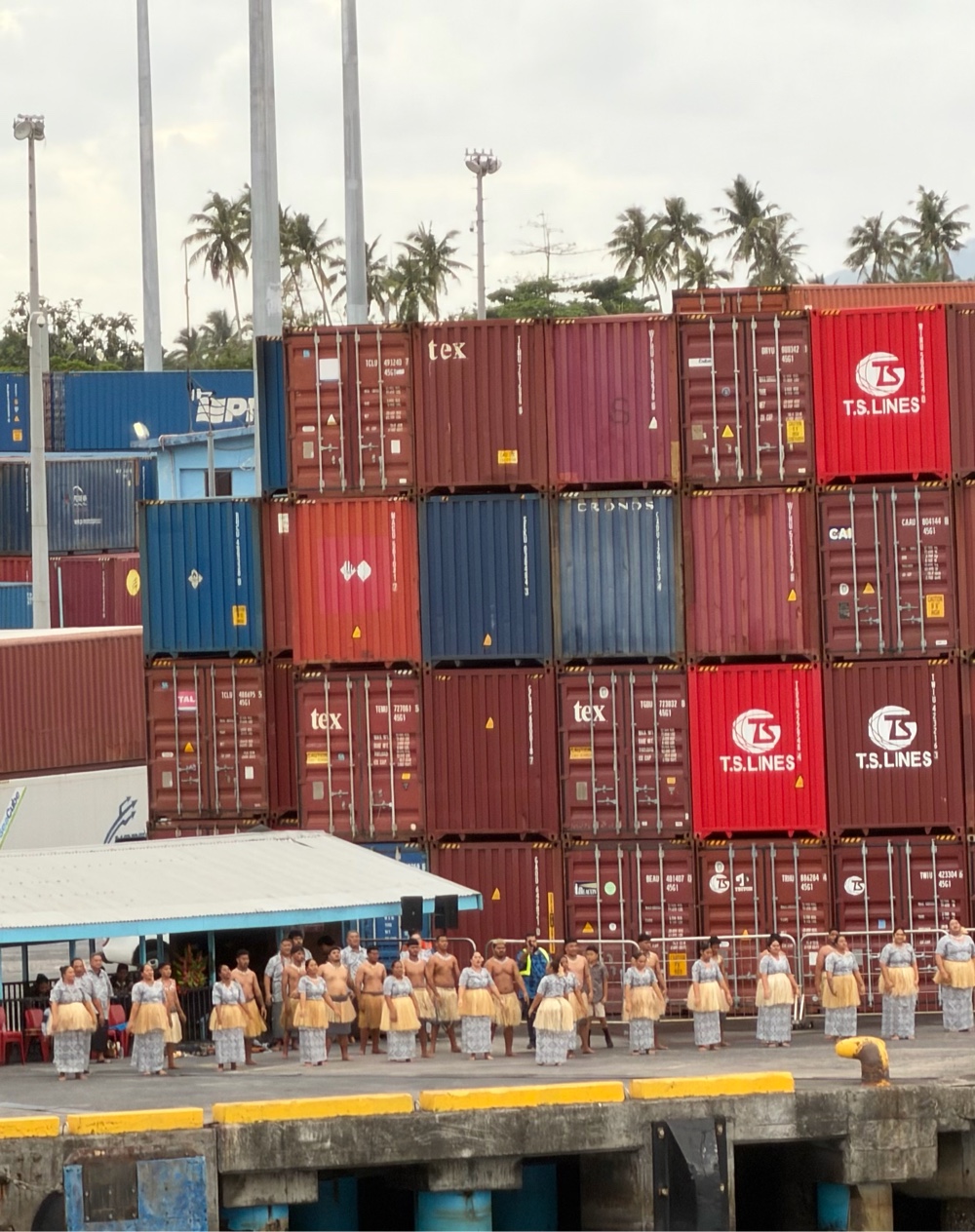
It’s always fun to arrive in port after several days at sea. I was on the Promenade Deck well before 7am, just as we entered Apia harbor. I could already hear musicians on the pier serenading us in, and as we got closer, noticed there were several dancers in traditional local attire already performing. What a nice welcome!
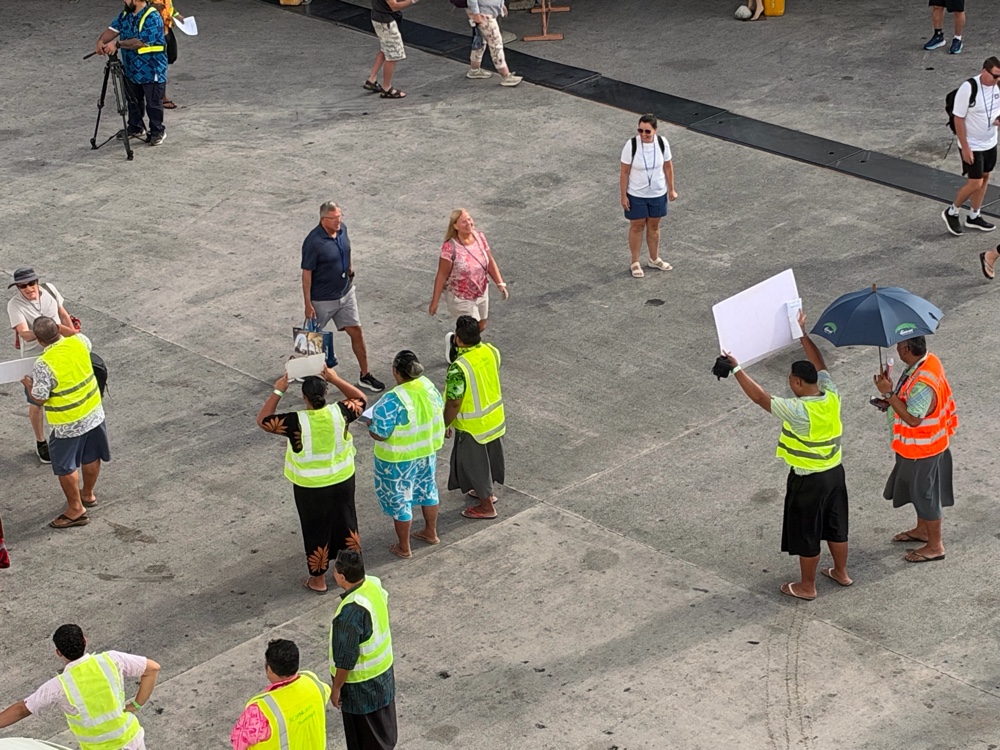
We met our tour company on the pier and immediately fell in love with our sweet tour guide Rachel. The tour company is small, family owned, and her husband, Sammy, drove one of the two buses that were used. We had comfortable seating for 18 passengers and started off.
 |
| With Sammy |
Rachel told us that cruise ship visits, though they’ve increased in number recently, are still only 5 or so each month, and the whole island gets very excited on cruise ship day. What a difference from how ships are viewed in most ports! We were constantly waved at by the locals, and welcomed by any people we spoke with. Very nice. Also, Rachel had a microphone so it it was easy to hear her. Also very nice.
American Samoa culture is traditional; Samoan culture even more so. Unless they live in the capital of Apia, people live in small villages scattered around the island. These villages are ruled over by chiefs, who are responsible for the wellbeing of their residents and appearance of the village. Justice is meted out at the village level, with drugs being the single biggest crime. With most people making about $1.66 an hour, a recent drug conviction carried a $15000 fine…that the entire family was liable for. Shame is a big deterrent here. The entire village comes together in a fale (an open, wall-less house that everyone has in their front yard) for prayers (mostly Catholic) at 6pm every night, and a curfew is strictly enforced.
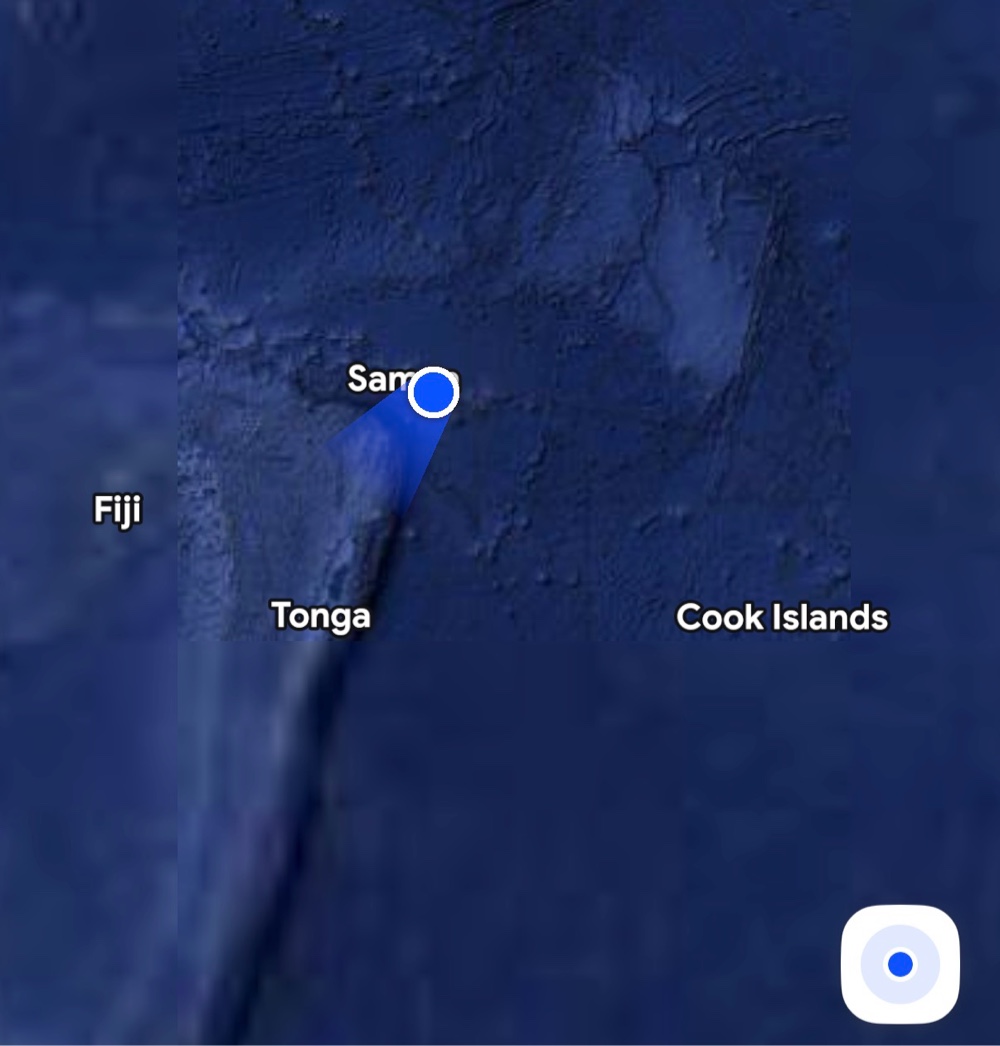
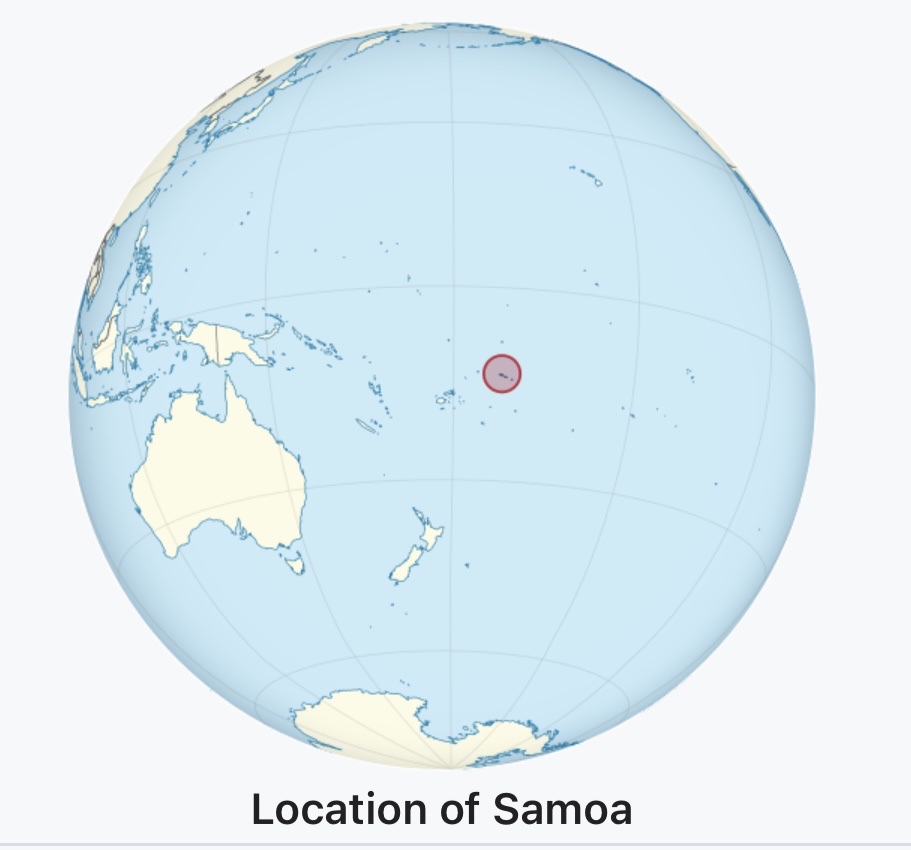
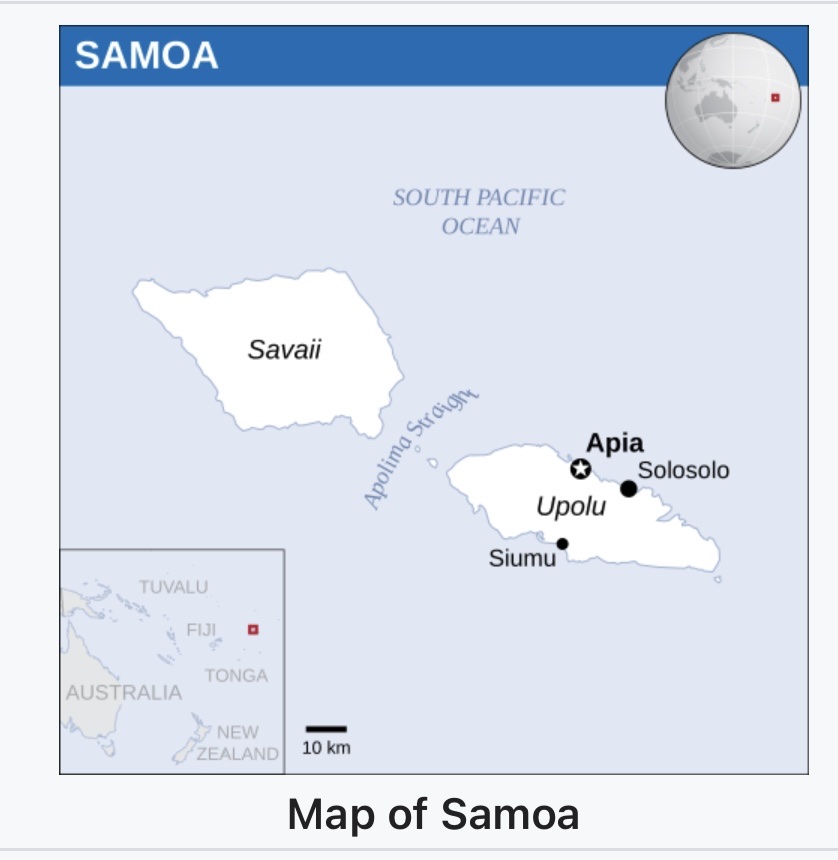
While we made our way to our first stop, Rachel gave us a history of the island and some idea of its size and population. It really is a subsistence economy, with fishing and some agriculture making up most of people’s income. As a result, it relies very heavily tourism to supplement its economy. The island we were visiting, called Upolu, is home to most of its people, and the capital of Apia. The other main island is Savaii and there are a small number of inhabitants on two smaller islands, as well as several uninhabited islands.
 |
| Source: Wikipedia |
 |
| Source: Wikipedia |
Samoa was controlled by the Germans just before the start of WWI and was called German Samoa, and New Zealand until 1961, when the country achieved its independence. It is a member of the Commonwealth, and they drive on the left side (now; they didn’t always, but most of their cars come from Japan and are right hand drive).
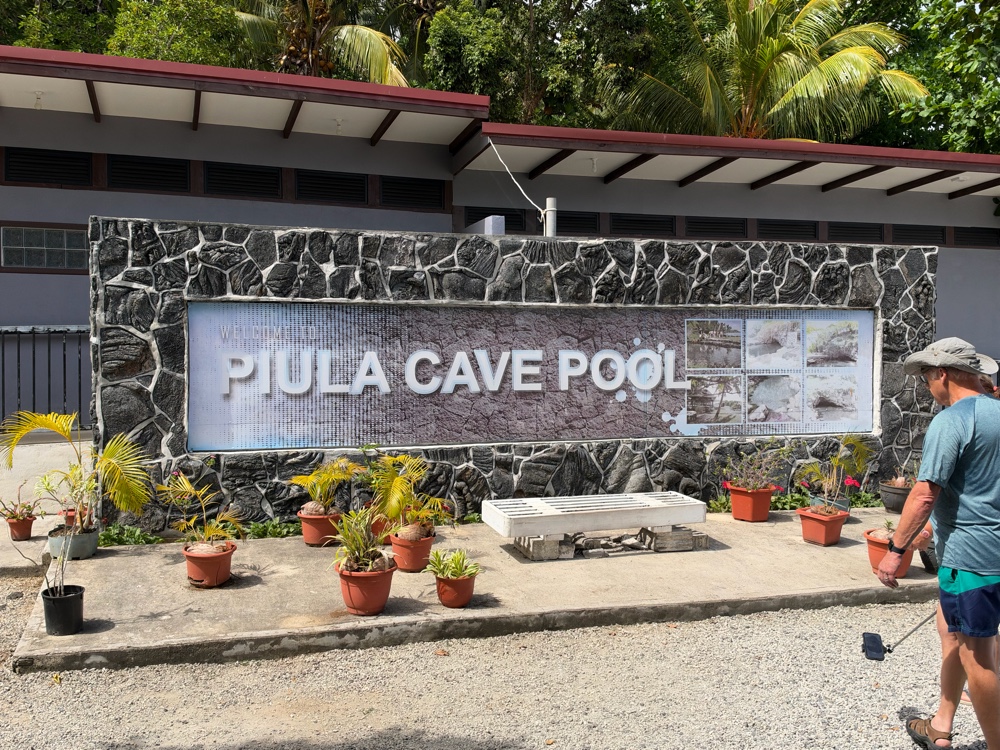
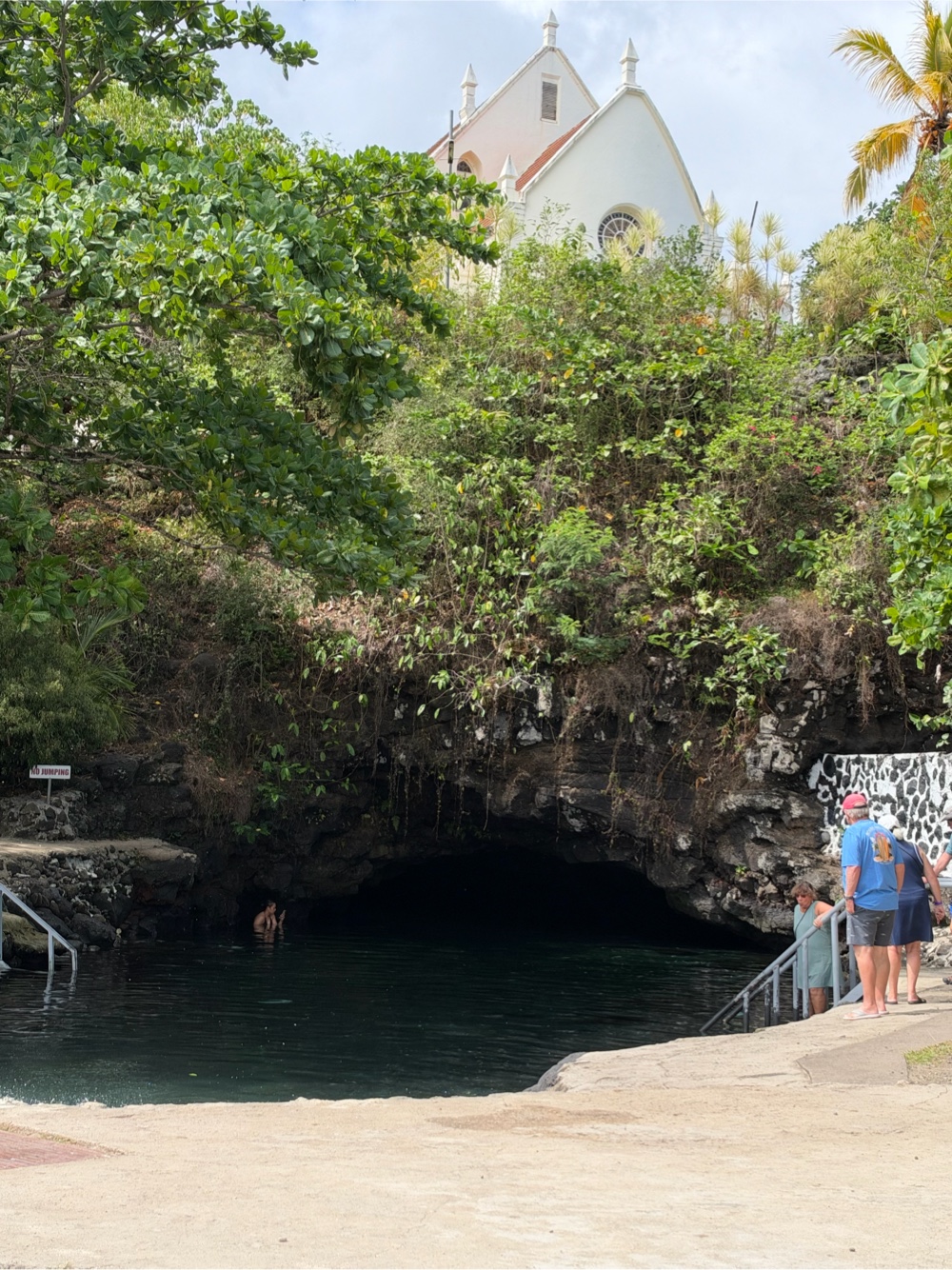
Our first stop was at the Piula Cave Pool on the grounds of the Piula Theological College. This is a freshwater swimming pool located inside of a lava tube. There is an underwater tunnel connecting the two grottos (I didn’t swim so far into the cave as to go underwater).
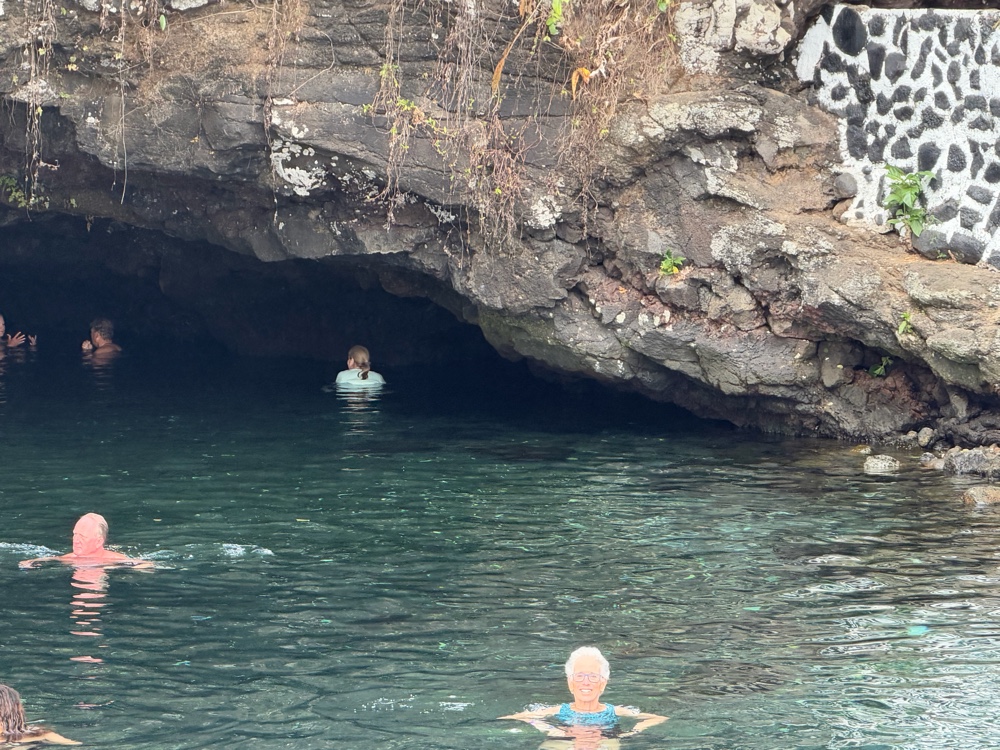 |
| Chilly (or, as the Aussies said, “fresh”) |
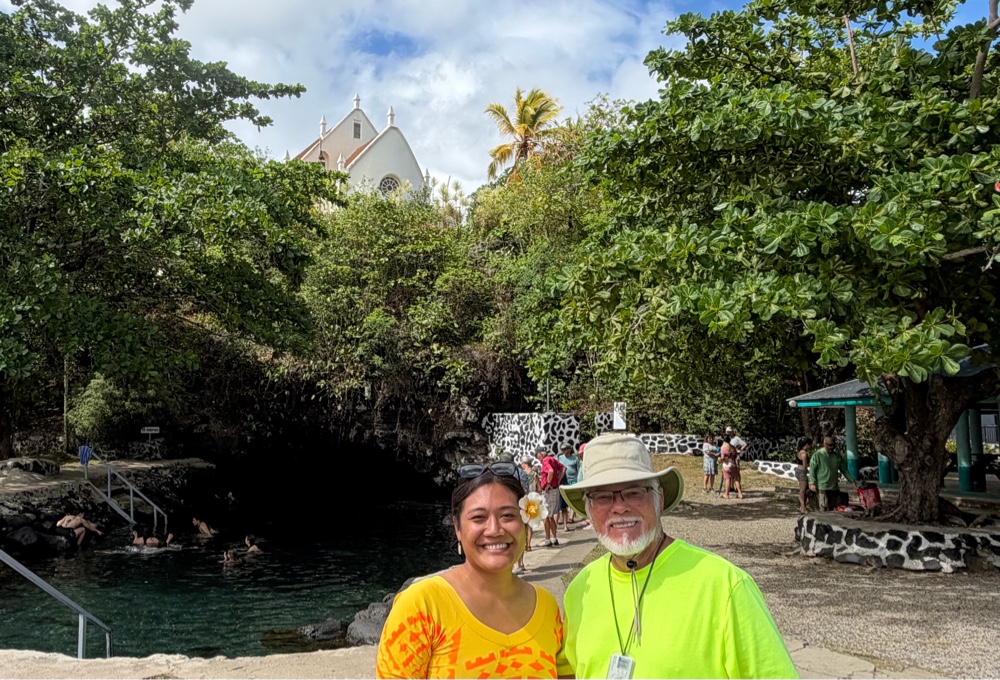 |
| Tour guide Rachel with G |
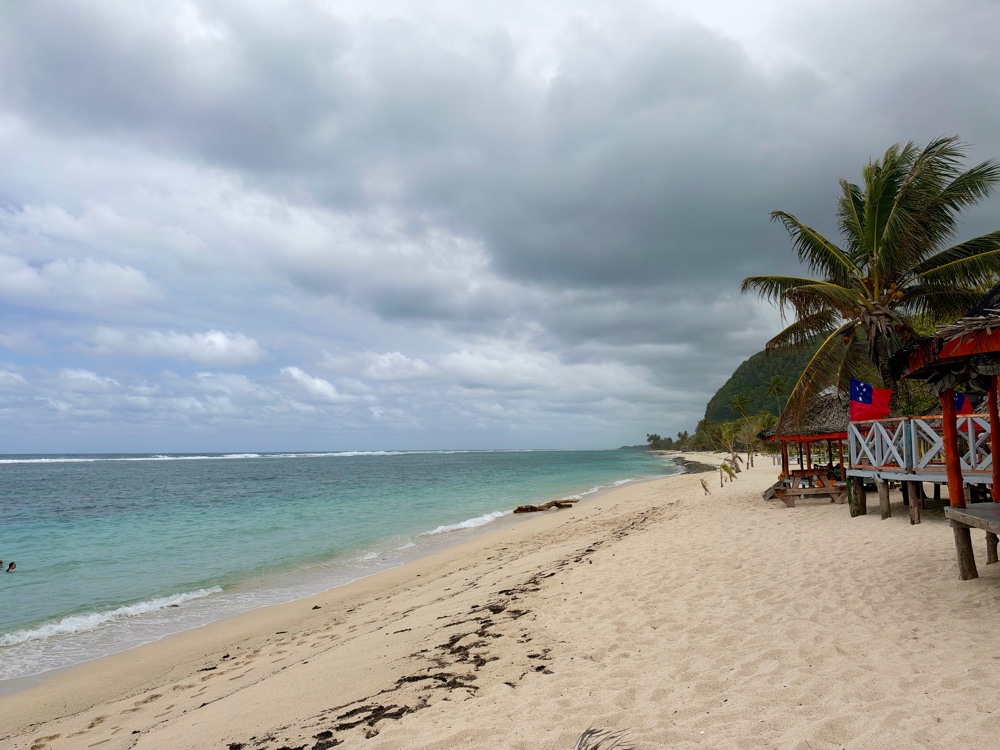
We next drove through the countryside to Lalomanu Beach, where we had use of a beach fale (open air “shelter”) with the opportunity to have lunch. Many people swam here, but I was still chilled from the Piula Cave Pool and chose to just lie in the sun.
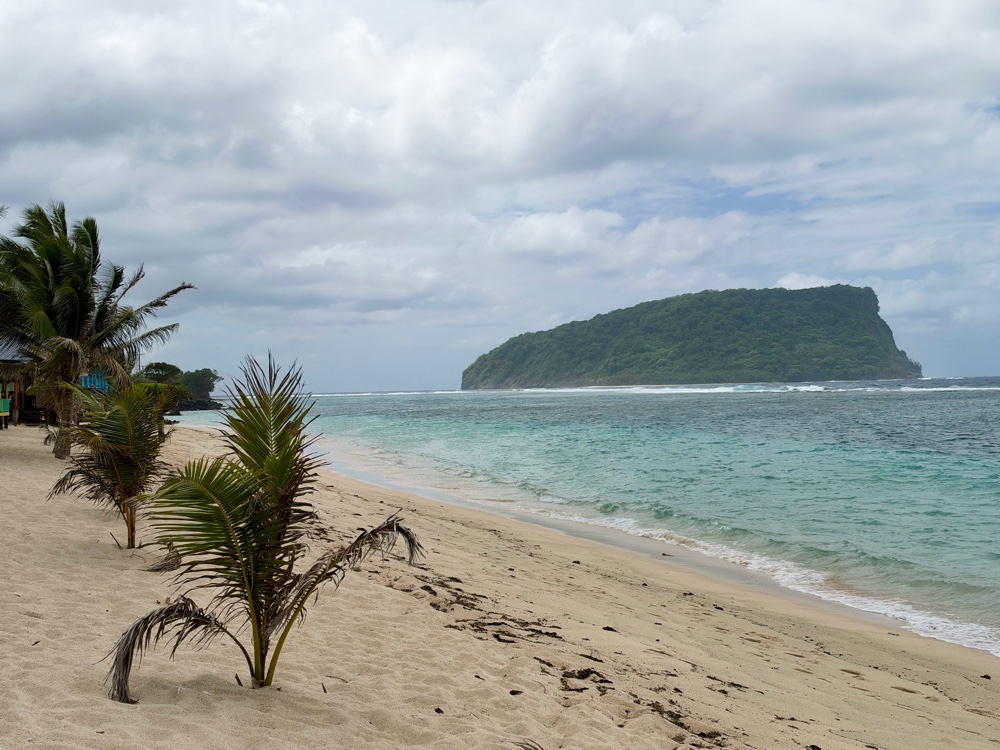 |
| Nu’utele Island just offshore at Lalomano Beach |
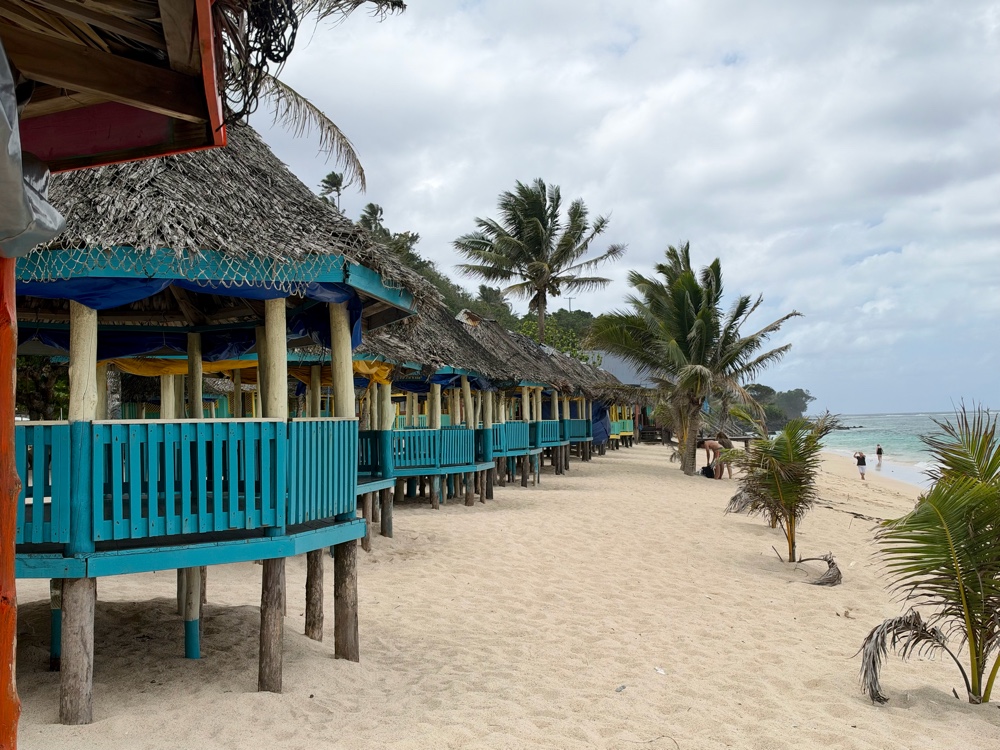 |
| Beach fales at Lalomanu Beach |
We had to skip the To Sua Ocean Trench stop, which was unfortunate, but the long, steep ladder into the volcanic crater collapsed last week (no one was hurt, as they would have fallen into the seawater that fills the crater in which people swim) and was being repaired.
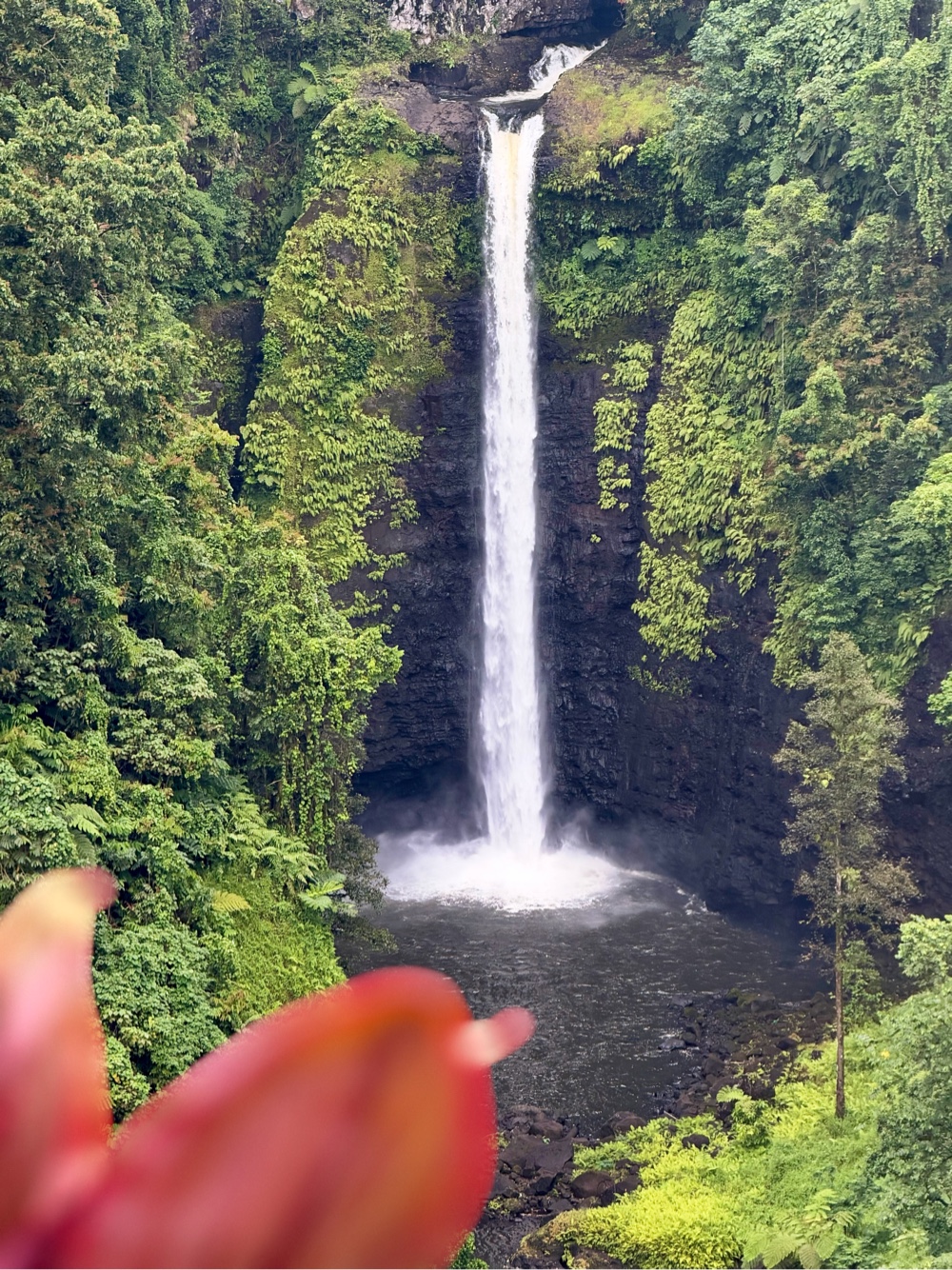
We then walked through a small (very small, as in family owned) botanic garden to Sopoaga Falls, a 30 meter high falls into the rainforest.
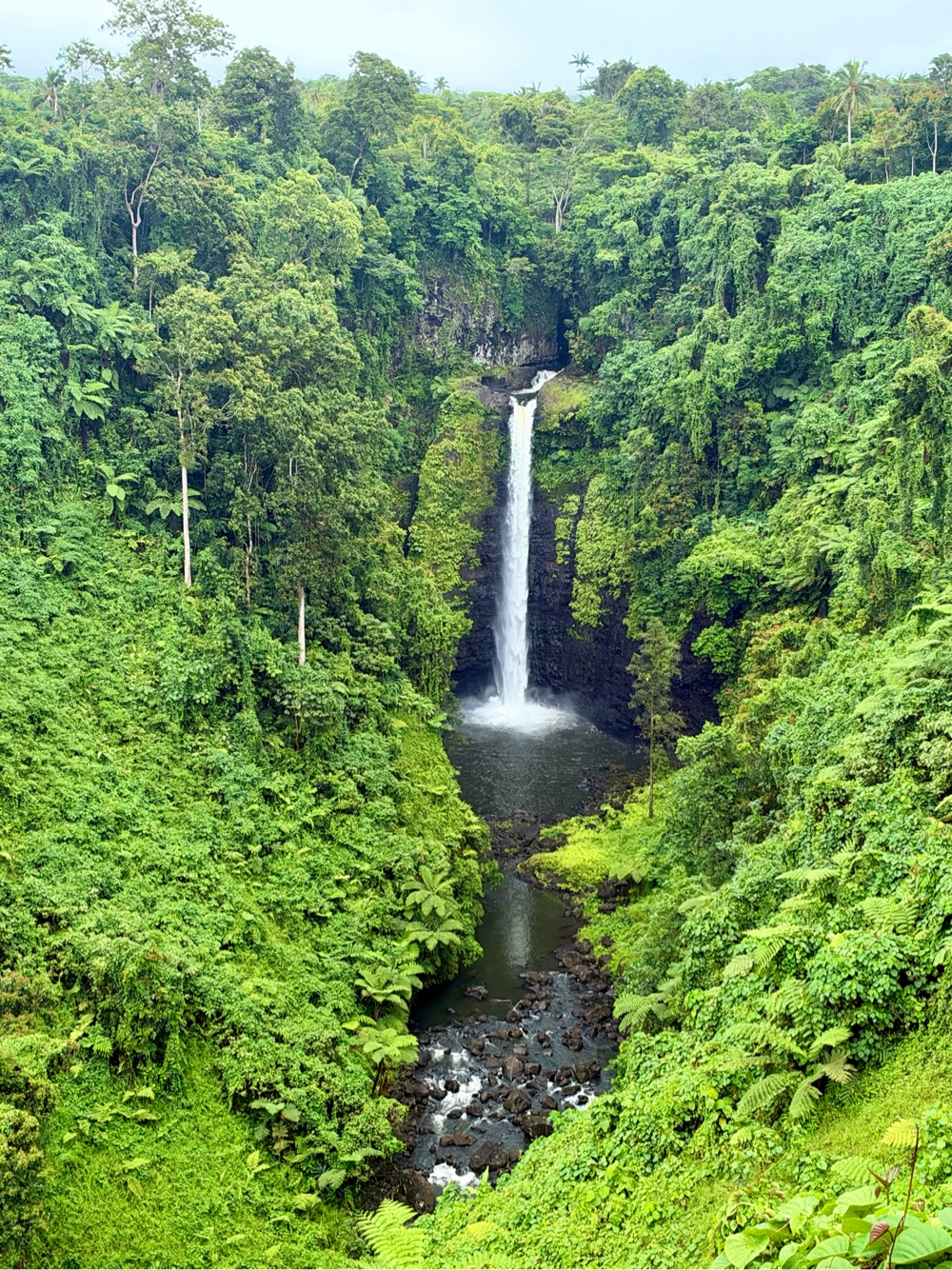 |
| Sopoaga Falls |
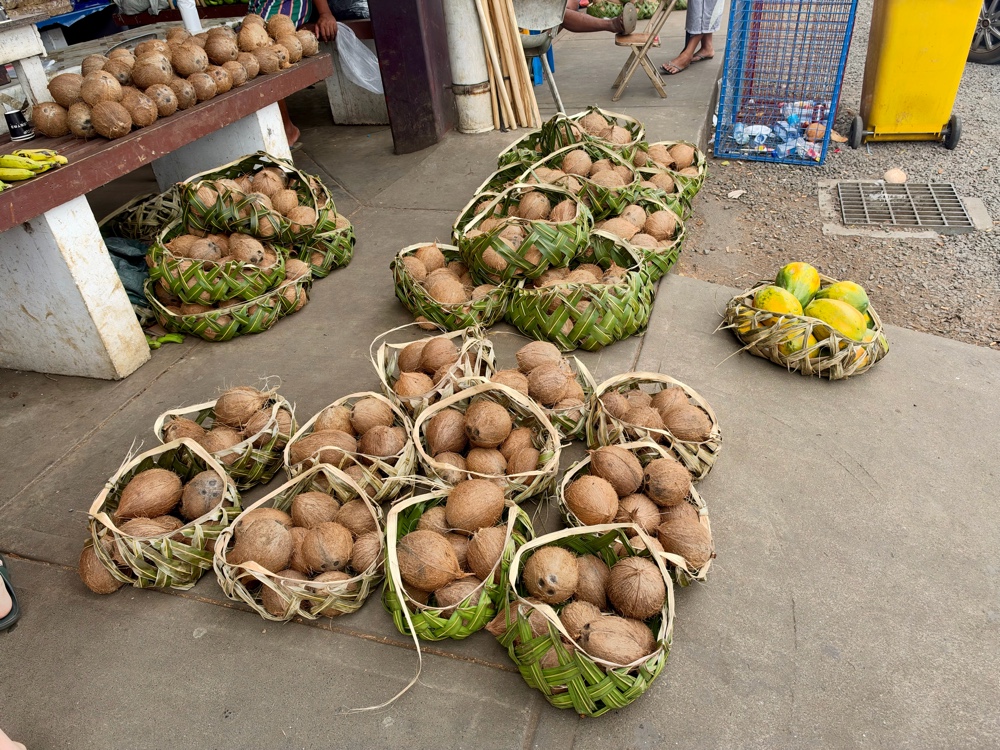
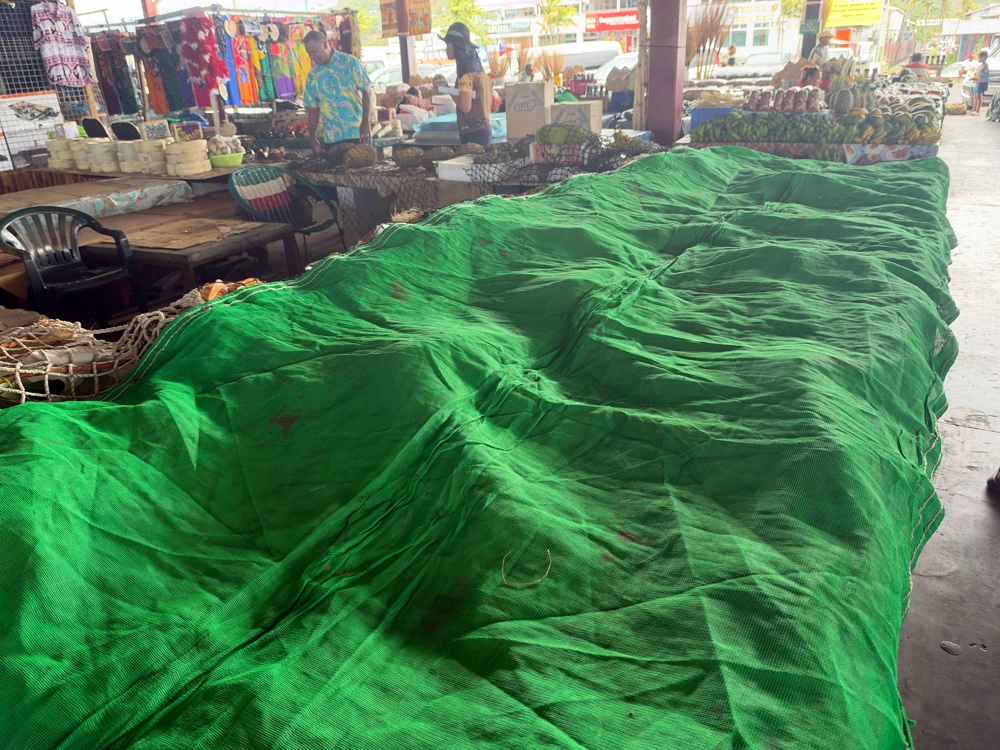
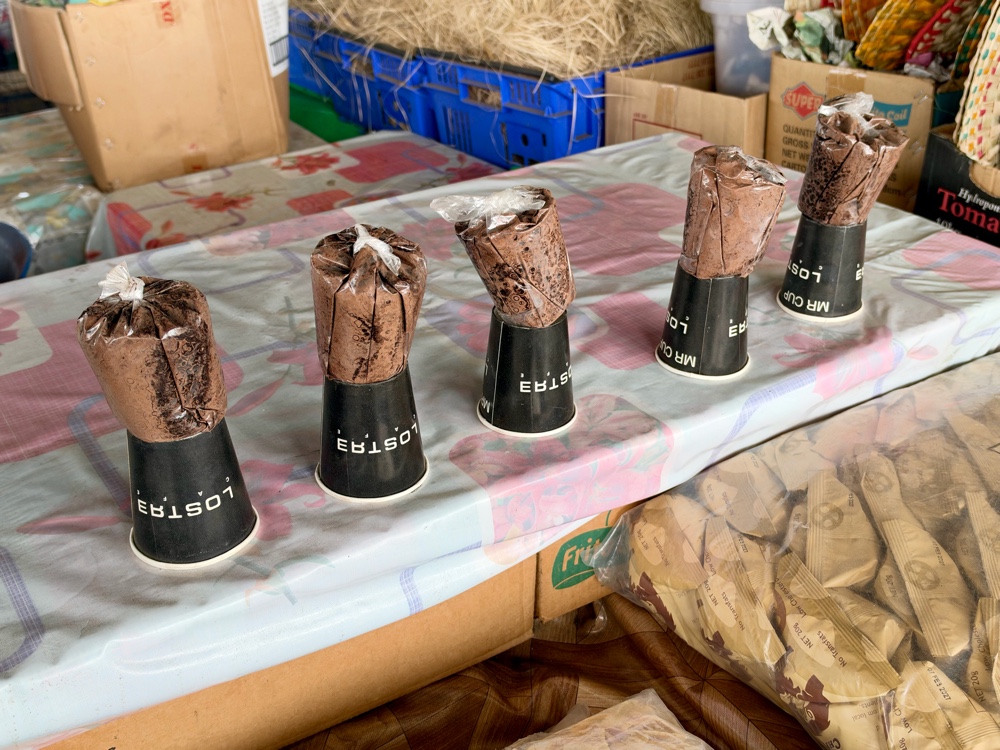
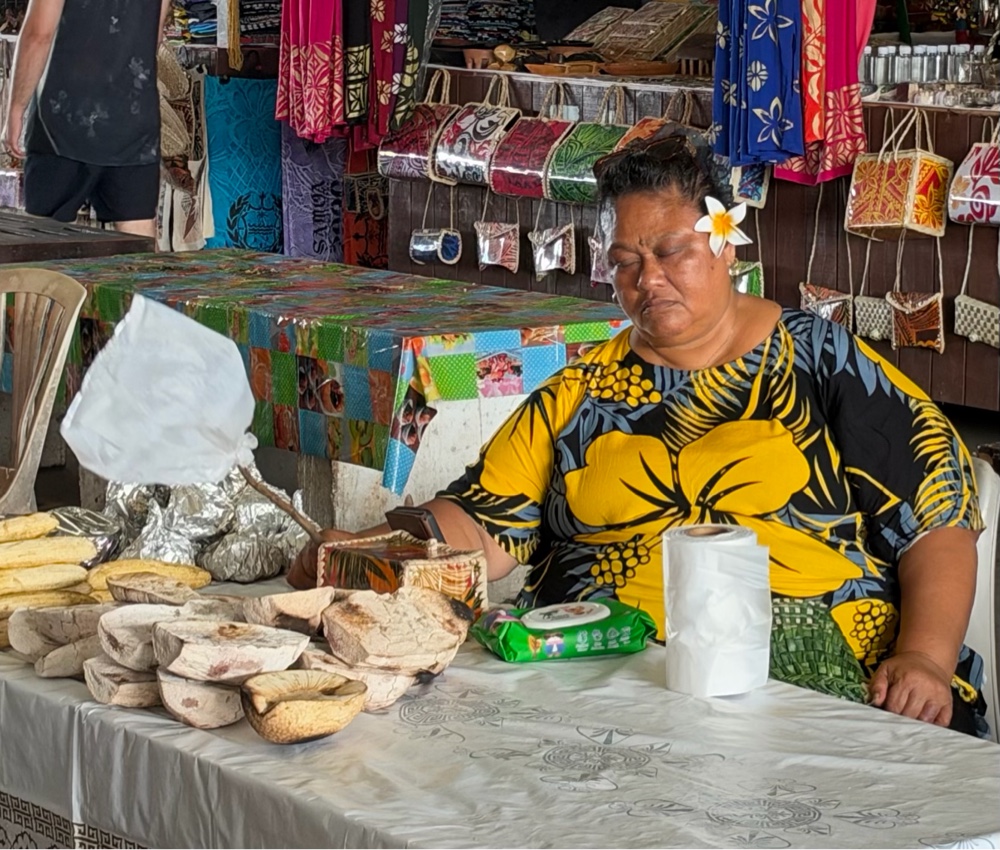
And finally, we finished up with a visit to the Apia market. Local markets (and grocery stores, for that matter) are always a favorite of mine.
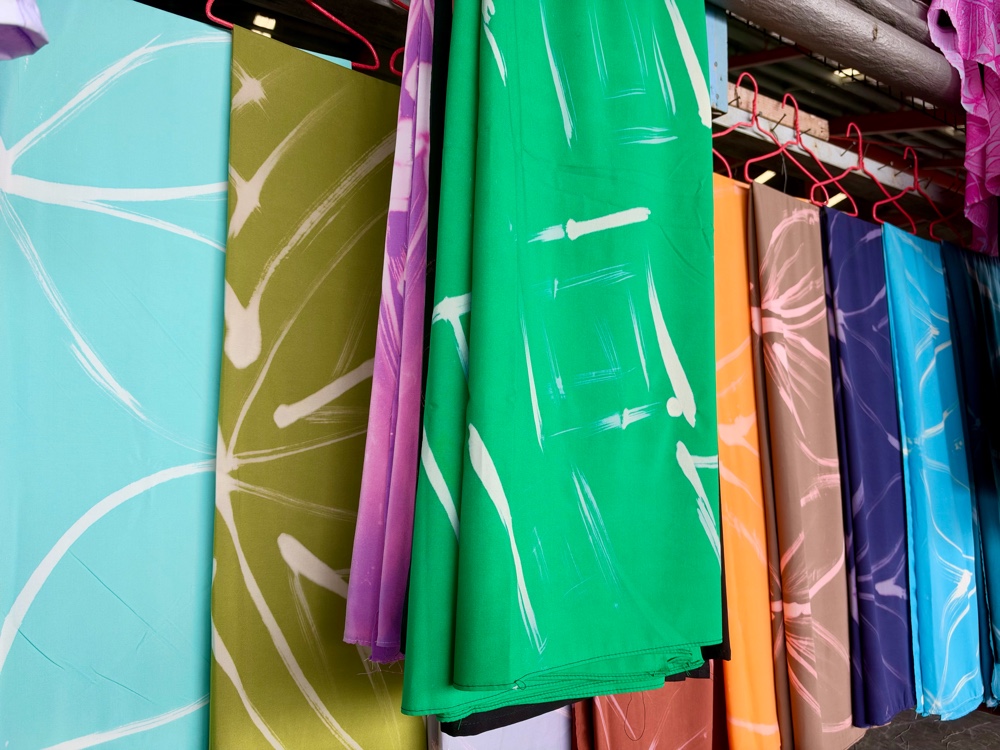
It was fun to see all the school kids in their uniforms throughout the day, always brightly colored lava lavas (like a pareo) and button down shirts. The girls wore small ties also. Everyone in Samoa and Western Samoa were lava lavas in everyday life, not just for the tourists.
Rachel gifted us all with a brightly colored lava lava of our own as the tour ended. We returned to the ship about 3pm and stopped at the International Cafe where I had soup (still trying to warm up! On a tropical island!) and we crashed in the cabin for just an hour or so before getting cleaned up for the evening. I wore my new lava lava tied around my waist and a white T-shirt but wore a pair of boy cut gym shorts under it in case of a wardrobe failure. 😉 We ate very lightly at dinner (that’s what a 3pm lunch at the International Cafe will do to you) before going to the Princess Theater for tonight’s entertainment.
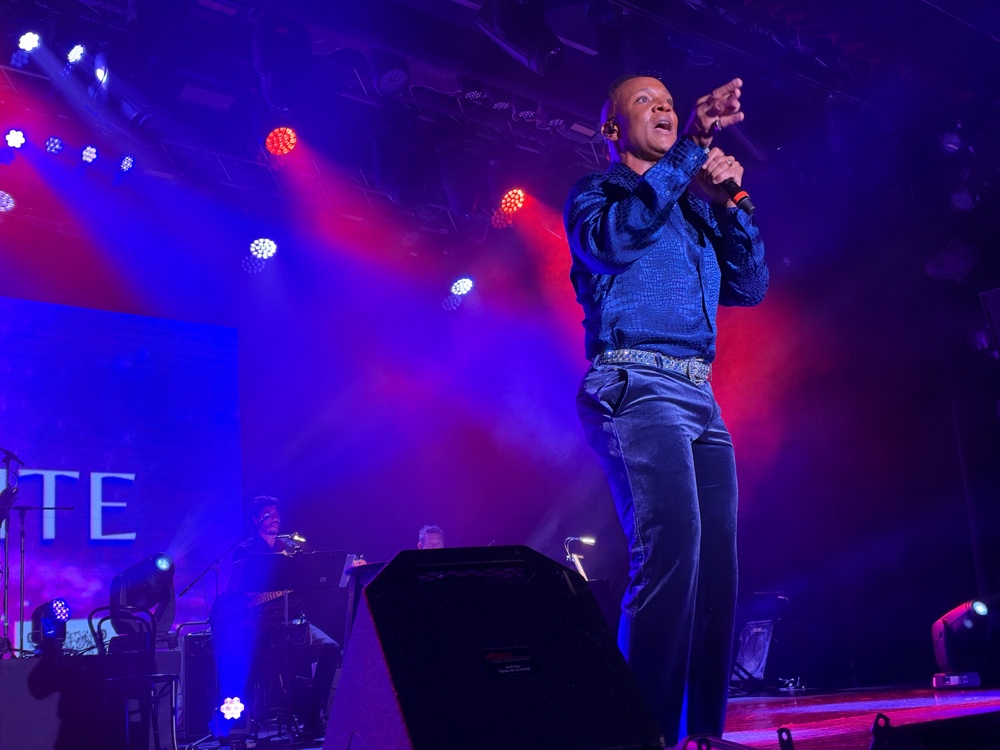
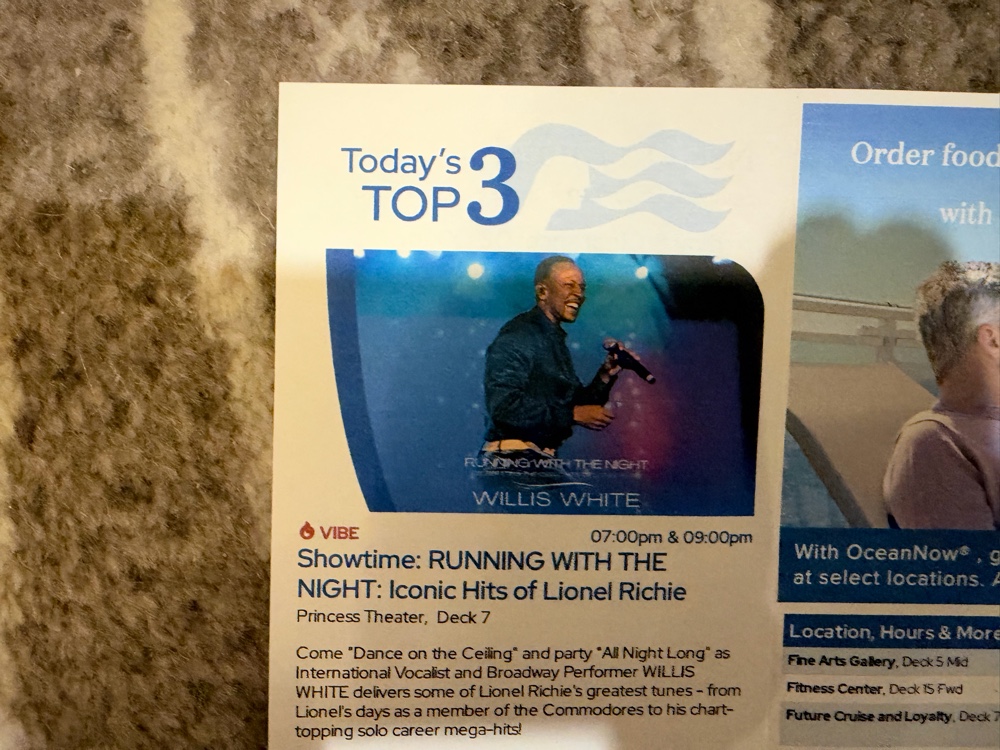
Vocalist Willis White was on board to do his Lionel Ritchie and Commodores tribute, and I LOVE that one. We’ve seen Willis a few times this year, on the Emerald Princess and the Star Princess, and I never tire of him or that music. We sat in the front row. Because…he’s mighty-mighty (get it? Brick House?).
I would have enjoyed seeing his second show, but we were tuckered out by then. All that moving the clocks back lately makes getting up early very easy, but staying up late nearly impossible.